Flexible Downstream Readouts
-
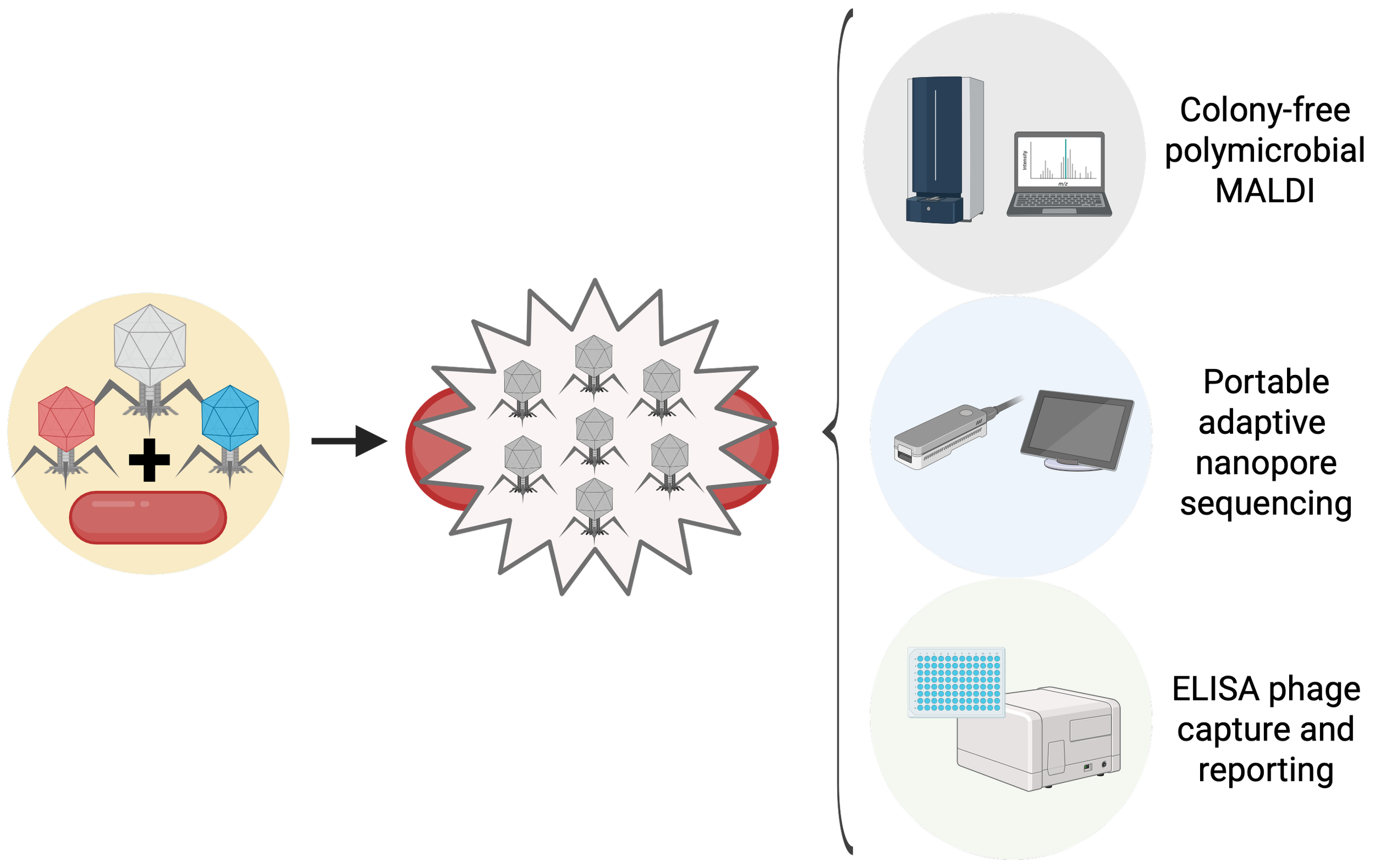
Rapid detection of phage‑amplified protein signatures compatible with established clinical microbiology workflows. No reliance on colony monoculture: Diagnostic phage amplification is compatible with polymicrobial specimens
-
Phage DNA amplification and barcoding strategies enable highly multiplexed pathogen identification and susceptibility profiling with inexpensive portable MinIon sequencers for decentralized deployment in LMIC and austere environments.
-
Cobio incorporates advanced data analysis and machine learning approaches to convert complex, multiparametric phenotypic signals into intuitive diagnostic outputs.
These tools enable harmonized interpretation across detection modalities while minimizing interpretive burden for laboratory personnel and clinicians.
-
High affinity anti-phage capture antibodies and colorimetric reporters allow simplified workflows that support low-resource settings, requiring basic pipetting skills and a common absorbance plate reader.
Cobio is building a diagnostic platform that harnesses the natural specificity and amplification power of lytic bacteriophages to produce rapid, phenotypic ID, AST, and MIC data directly from clinical specimens.
The same underlying biology supports multiple analytical readouts and deployment models, enabling flexibility without sacrificing rigor.
A Phage‑Amplified Diagnostic Platform
Targeted Phage Interaction
Cobio’s proprietary species‑specific lytic bacteriophage formulations selectively bind their bacterial hosts.Biological Amplification
Phage replication occurs only in viable bacteria, amplifying signals that reflect true phenotypic response in the presence of antibiotics.Flexible Detection
Exponential amplified phage signals are measured using mass spectrometry, nanopore sequencing, or immunoassay‑based methods.Actionable Interpretation
AI‑enabled data deconvolution and machine learning transforms complex simultaneously streaming ID, AST and MIC signals data into user‑friendly diagnostic readouts.
How the Platform Works
How It Works
Phenotypic Measurement at the Core
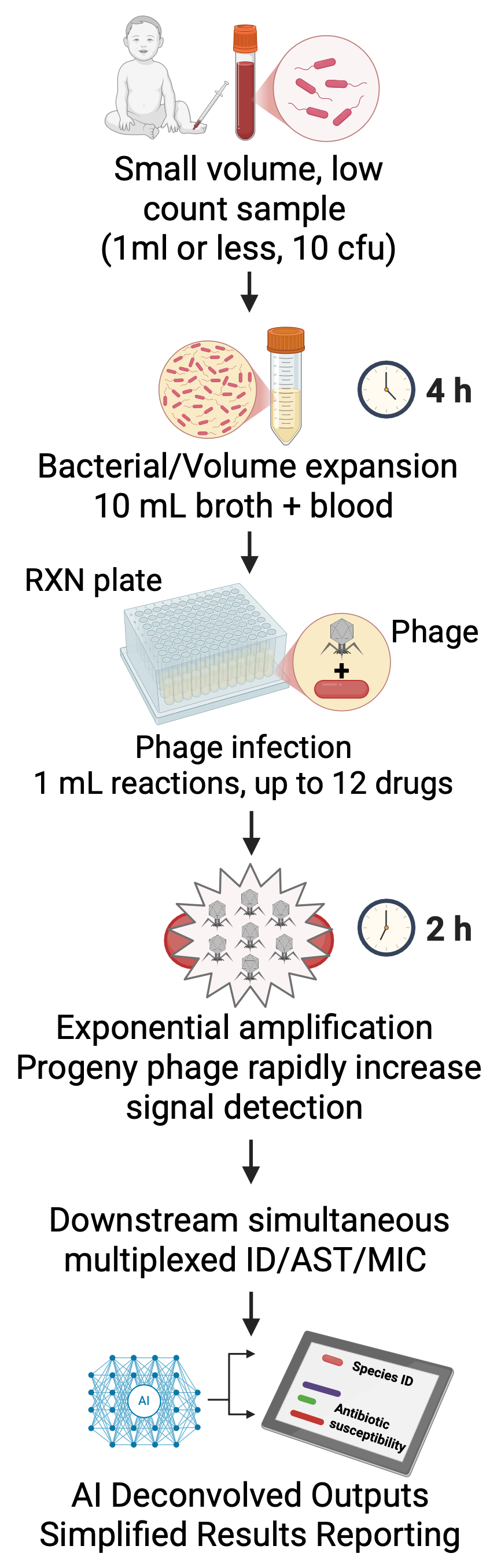
Cobio’s platform is inherently phenotypic. Because phage replication depends on viable bacterial hosts, the presence or absence of amplified signal directly reflects antimicrobial susceptibility and bacterial growth dynamics.
This cocktail approach enables accurate, overlapping phenotypic assessment even in the presence of emerging, evolving or cryptic resistance mechanisms.
Step‑by‑Step Workflow
Sample Input
Clinical specimens such as blood, urine, or other bodily fluids are introduced with minimal preprocessing.
Phage‑Antibiotic Exposure
Samples are exposed to species‑specific phages in the presence of antibiotics at defined, standardized concentrations.
Amplification & Readout
Viable, resistant bacteria support phage replication, producing amplified signals measured by the selected detection method.
Data Deconvolution
Computational tools translate signal patterns into ID, AST, and MIC‑relevant outputs.